
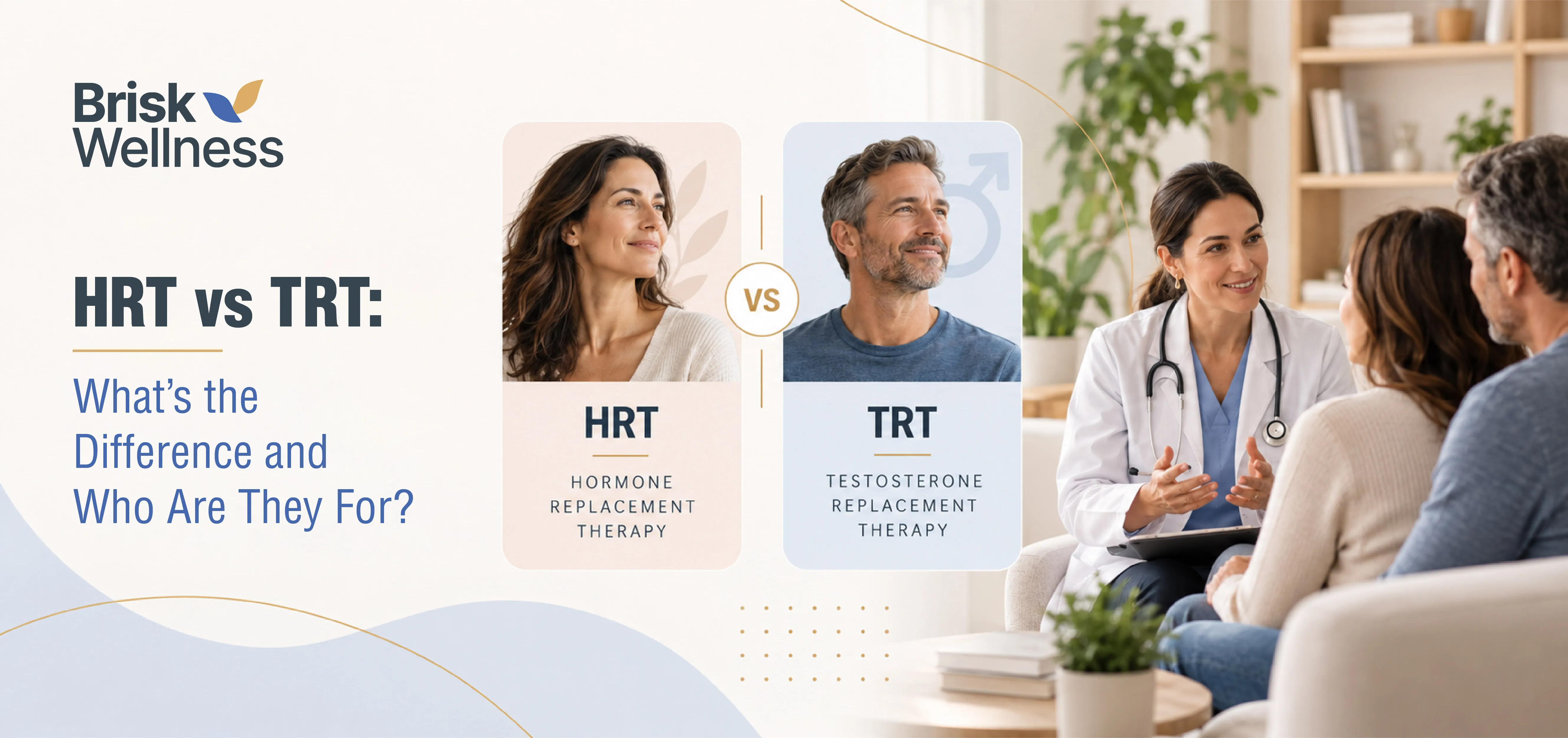
Hormone therapy can get confusing fast.
You hear HRT, TRT, testosterone, estrogen, hormone replacement, and suddenly it sounds like they're all the same thing.
They're not.
While both HRT and TRT involve replacing or supplementing hormones, they're used in different situations and aren't interchangeable.
So, HRT vs TRT; what's the actual difference?
Let's make it simple.
What Does HRT Mean?
HRT stands for hormone replacement therapy.
The term is most commonly associated with treating hormone changes during menopause, particularly when declining estrogen and other hormonal changes cause bothersome symptoms.
Depending on the individual's needs, HRT may involve estrogen, progesterone, or other hormone-based treatment.
It can be used to address symptoms such as:
- Hot flashes and night sweats
- Vaginal dryness
- Sleep disruption
- Certain menopause-related symptoms
- Bone health considerations
This is why you'll often hear about HRT for women.
But HRT isn't exclusively a “women's treatment.” The broader term simply refers to replacing hormones that the body isn't producing adequately or that require treatment for a particular medical reason.
So, What Is TRT?
TRT stands for testosterone replacement therapy.
Unlike the broader term HRT, TRT specifically focuses on testosterone.
TRT for men is generally considered when a man has symptoms consistent with testosterone deficiency along with appropriately confirmed low testosterone levels.
Symptoms can include low libido, reduced energy, changes in muscle mass, or other symptoms—but these can also have many other causes.
That's why testosterone shouldn't be prescribed simply because someone feels tired or wants better gym results.
A proper medical evaluation matters.
HRT vs Testosterone Therapy: The Simple Difference
Think of it this way:
HRT is a broader category of hormone replacement.
TRT is testosterone-specific hormone replacement.
So when people search for HRT vs testosterone therapy, they're often comparing a broad category with one specific type of hormone treatment.
They're related—but they're not the same thing.
HRT vs TRT: A Quick Comparison
HRT (Hormone Replacement Therapy)
- What does it mean?
- Hormone Replacement Therapy
- Main focus:
- Depends on the treatment
- Common use:
- Menopause-related hormone treatment
- Often discussed for:
- Women, particularly around menopause
- Treatment:
- Depends on individual needs
- Requires medical evaluation?
- Yes
TRT (Testosterone Replacement Therapy)
- What does it mean?
- Testosterone Replacement Therapy
- Main focus:
- Testosterone
- Common use:
- Clinically confirmed testosterone deficiency
- Often discussed for:
- Men with testosterone deficiency
- Treatment:
- Testosterone
- Requires medical evaluation?
- Yes
The important part isn't choosing between the two.
It's figuring out which treatment, if any, is appropriate for you.
What About Hormone Therapy in General?
Here's where the terminology gets even more confusing.
Hormone therapy is the broadest phrase. HRT can fall under that umbrella, while TRT is a specific form of testosterone therapy.
That's why searching for “hormone therapy” can bring up completely different treatments.
The right treatment depends on which hormone is involved, why it's being considered, your symptoms, and your overall health.
Can Women Use Testosterone?
This is one of the most common questions.
Testosterone isn't exclusively a “men's hormone.” Women naturally produce testosterone too, although at much lower levels.
However, that doesn't mean testosterone therapy is appropriate for every woman experiencing fatigue, low libido, or other symptoms.
If testosterone is being considered, a healthcare professional should evaluate the individual circumstances and discuss potential benefits and risks.
Can Men Use HRT?
Again, terminology matters.
Men can receive hormone replacement when medically appropriate, but TRT is the term specifically used when the treatment involves replacing testosterone.
So if a man has clinically confirmed testosterone deficiency, the conversation is generally about testosterone replacement therapy, rather than the menopause-focused HRT you may see discussed online.
What Should You Consider Before Starting Treatment?
Don't start with the question:
“Which hormone should I take?”
Start with:
“What's causing my symptoms?”
Fatigue, weight changes, low libido, sleep problems, mood changes, and changes in body composition can have many possible causes.
A responsible provider should look at your symptoms and health history, evaluate whether hormone deficiency is actually present, and explain your treatment options.
That applies whether you're considering HRT, TRT, or another form of hormone therapy.
Can You Get Hormone Care Online?
Today, online wellness services can make it easier to access healthcare without automatically meaning lower-quality care.
Depending on your location and circumstances, telehealth may allow you to speak with a qualified healthcare professional, discuss symptoms, review your medical history, and determine whether further evaluation or treatment is appropriate.
If you're comparing providers, look for licensed clinicians, appropriate evaluations, clear pricing, legitimate medication sources, and ongoing follow-up.
And if you're a wellness professional exploring a telehealth platform for wellness coaches, having access to appropriate clinical infrastructure can make it easier to connect clients with qualified medical care when healthcare services are involved.
The Bottom Line
The HRT and TRT difference comes down to what hormone is being replaced and why.
Hormone replacement therapy is a broader term that can involve different hormones and medical situations.
Testosterone replacement therapy specifically refers to testosterone treatment when medically appropriate.
Neither is a shortcut to feeling better, building muscle, losing weight, or “optimizing” yourself.
The right treatment starts with understanding what's actually happening in your body.
If you're considering hormone therapy and want to understand your options, get in touch with Brisk Wellness to explore personalized care.
You can also become an affiliate partner with us.