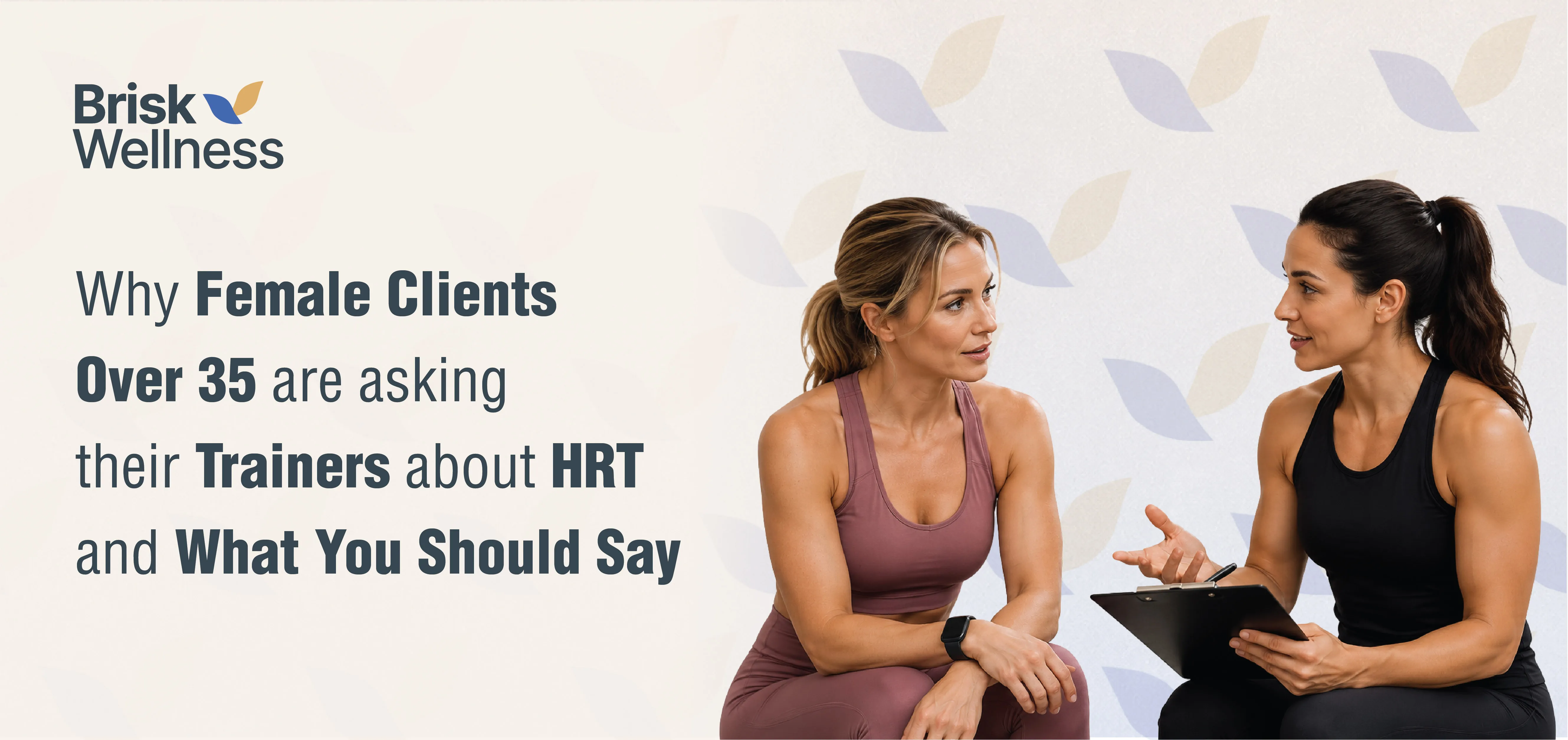
There comes a point in almost every trainer's career when the questions change.
Instead of asking how to lose the last five pounds or improve squat depth, female clients start saying things like:
"I've been doing everything right, but my body feels different."
"Why am I gaining weight around my stomach all of a sudden?"
"My energy is all over the place."
"Have you heard about HRT?"
If most of your clients are women over 35, these conversations probably sound familiar.
The challenge is knowing how to respond.
You want to help, but you also know hormone therapy isn't something you should be recommending on your own.
The good news? You don't have to.
Why More Women Are Talking About Hormones
Hormones have become one of the biggest topics in women's health over the last few years.
More women are openly discussing perimenopause, menopause, hormonal changes, and how they affect everything from workouts to sleep and recovery.
According to the North American Menopause Society (now The Menopause Society), most women enter perimenopause during their 40s, although hormonal changes can begin earlier. Symptoms can include changes in sleep, mood, body composition, and energy levels.
That's one reason trainers are hearing more questions than ever before.
Sometimes It Isn't the Workout
A client who's suddenly struggling with recovery isn't always undertraining.
A client who's gaining weight despite consistency isn't always lacking discipline.
A client who's feeling exhausted may not simply need another rest day.
Hormonal changes can influence how women feel, recover, and respond to training, particularly during perimenopause and menopause.
That doesn't mean hormones are always the cause.
But they deserve to be part of the conversation.
What Trainers Should Do
Your role hasn't changed.
You still coach movement.
Nutrition.
Consistency.
Healthy habits.
What changes is knowing when to encourage someone to explore what's happening beyond the gym.
Here's a simple guide.
If Your Client Says…
- "I'm exhausted all the time."
- "Nothing seems to be working anymore."
- "Do you think I need HRT?"
You Can Say…
- "If it's been ongoing, it may be worth speaking with a healthcare provider."
- "There could be several reasons. A provider can help rule out hormonal changes."
- "That's a medical decision, but it's definitely worth discussing with a licensed provider."
Notice something?
You're supporting the client without trying to diagnose them.
What Is HRT for Women?
HRT for women, or hormone replacement therapy, is a medical treatment used to help manage symptoms associated with menopause and, in some cases, perimenopause.
Whether it's appropriate depends on a woman's symptoms, medical history, age, and a provider's evaluation.
That's why social media shouldn't replace medical advice.
Hormone Therapy and Fitness Go Hand in Hand
Training still matters.
Protein still matters.
Sleep still matters.
But when hormones begin to change, clients often discover that the same strategies they've used for years no longer produce the same results.
That's why conversations around hormone therapy fitness have become so common.
Fitness supports healthy aging.
Healthcare supports the person behind the workouts.
The two should complement each other, not compete.
Where Brisk Wellness Fits
If you're already having conversations about recovery, energy, healthy aging, and hormonal health, you don't need to become an expert in hormone therapy.
You simply need to know where to send clients when the conversation becomes medical.
Through the Affiliate program for women's health, Brisk Wellness allows trainers, wellness coaches, and creators to connect women with provider-guided care while creating an additional revenue stream built on trust.
You continue coaching.
Licensed providers handle evaluation and treatment decisions.
Final Thoughts
Women over 35 aren't asking trainers about hormones because they expect medical advice.
They're asking because they trust them.
Knowing when to listen, when to encourage healthy habits, and when to recommend professional evaluation may be one of the most valuable skills a coach can develop.
Sometimes the best answer isn't having all the answers.
It's helping someone find the right one.
Help Your Clients Take the Next Step
As conversations around women's health continue to grow, so does the need for trusted guidance.
The Brisk Wellness Affiliate Program helps coaches connect clients with provider-guided care while staying focused on what they do best.
Apply today and become part of a more connected approach to women's wellness.
FAQs
My client keeps asking about HRT. What should I say?
You don't need to give medical advice. Listen to their concerns and encourage them to speak with a licensed healthcare provider who can evaluate their symptoms and discuss appropriate treatment options.
Can hormonal changes really affect fitness progress?
Yes. Changes during perimenopause and menopause can influence energy, recovery, body composition, and overall performance, which is why many women notice their workouts feel different over time.
Should trainers recommend HRT for women?
No. HRT is a medical treatment that should only be discussed and prescribed by qualified healthcare providers after an individual evaluation.
Why are more women over 35 asking about hormones?
Awareness around perimenopause and menopause has grown significantly, helping more women recognize that some physical changes may be linked to hormonal shifts rather than simply aging or lack of effort.
How does the Brisk Wellness Affiliate Program help coaches?
It gives coaches a trusted way to connect clients with provider-guided women's health services while creating an additional income opportunity through qualified referrals.