
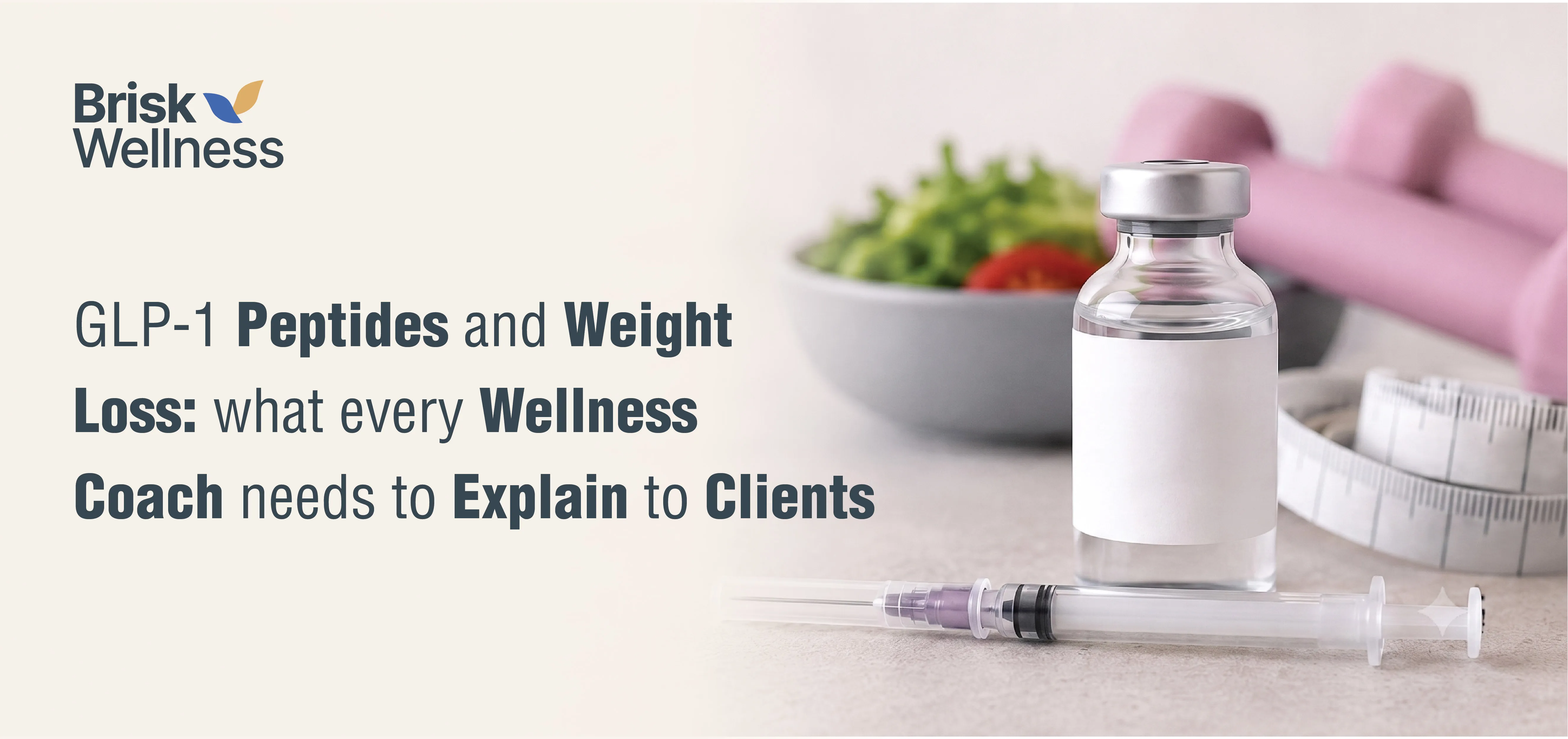
Walk into almost any gym today and you'll hear someone talking about GLP-1s.
Not necessarily trainers.
The clients.
One wants to know if they actually work.
Another is worried about losing muscle.
Someone else says a friend has already lost 30 pounds using one.
A year or two ago, these conversations barely existed. Today, they're becoming part of everyday wellness coaching.
That leaves a lot of coaches wondering where they fit in.
Should you explain how GLP-1s work?
Should you encourage them?
Should you stay completely out of it?
The answer sits somewhere in the middle.
You're not responsible for deciding whether someone needs GLP-1 treatment. That's a decision between the patient and a licensed healthcare provider.
But once a client starts asking questions or begins treatment, your coaching becomes even more important.
According to KFF (Kaiser Family Foundation), about 1 in 8 U.S. adults say they've taken a GLP-1 medication at some point. That's a huge shift in a relatively short period of time and explains why these conversations are showing up in gyms, fitness studios, and wellness communities across the country.
So... What Exactly Are GLP-1 Medications?
Ask ten people and you'll probably get ten different answers.
Some call them weight loss injections.
Some think they're appetite suppressants.
Others believe they're a shortcut.
The truth is a little more nuanced.
GLP-1 medications mimic a naturally occurring hormone that helps regulate appetite, slows how quickly food leaves the stomach, and plays a role in blood sugar regulation.
For eligible patients, they can become part of a broader medical weight loss plan under the supervision of a licensed healthcare provider.
Notice the words part of.
The medication isn't replacing healthy habits.
It's supporting them.
The Biggest Misunderstanding Coaches Hear
One of the most common comments sounds something like this:
"If I'm taking a GLP-1, I don't really need to focus on nutrition anymore... right?"
Not quite.
People taking GLP-1 peptides for weight loss often eat less because they feel full sooner.
That's exactly why nutrition becomes more important, not less.
When calorie intake drops significantly, protein intake can drop too.
Recovery may feel different.
Hydration becomes easier to overlook.
Clients who continue strength training while prioritising protein and recovery generally put themselves in a much better position than those who rely on medication alone.
That's where coaches add tremendous value.
What Should a Wellness Coach Actually Explain?
You don't need to give a science lecture.
You don't need to memorise clinical studies.
You just need to help clients understand a few important things.
Your Client Might Think…
- "The medication does all the work."
- "I don't need to strength train anymore."
- "I barely feel hungry, so I'll just skip meals."
- "Everyone should be taking GLP-1s."
What You Can Explain
- Healthy habits still play a major role in long-term weight loss success.
- Resistance training helps preserve muscle while losing weight.
- Eating enough protein and staying well-hydrated remains essential.
- GLP-1 medications aren't appropriate for everyone and require a medical evaluation before use.
Notice something?
None of those explanations involve diagnosing, prescribing, or recommending medication.
You're simply helping clients make better lifestyle decisions while reminding them to follow the guidance of their healthcare provider.
GLP-1 Isn't a Replacement for Coaching
Some coaches worry that medications will make them less valuable.
In reality, the opposite often happens.
Clients still need accountability.
They still need exercise programming.
They still need someone to help them build sustainable habits once the initial excitement wears off.
Medication might help create the opportunity for weight loss.
Coaching helps people build the lifestyle that keeps those results going.
For many clients, that's the difference between losing weight temporarily and creating long-term change.
How Should Training Change When a Client Starts GLP-1 Treatment?
This is probably the question coaches ask most.
The good news? You don't need to throw away the entire program.
Instead, pay closer attention to how your client is feeling from week to week.
The first few weeks of GLP-1 treatment can be an adjustment. Some people experience reduced appetite, lower energy, or mild nausea while their bodies adapt.
That doesn't mean they should stop exercising.
It simply means the program may need a little more flexibility.
Here's what many coaches focus on:
Coaching Priorities
- Strength Training: Helps preserve lean muscle during weight loss.
- Protein Intake: Supports muscle recovery and overall health.
- Hydration: Reduced appetite can sometimes lead to lower fluid intake, making hydration especially important.
- Recovery: Energy levels may fluctuate, particularly during the early stages of treatment.
- Regular Check-ins: Small, consistent adjustments are often more effective than major changes.
The goal isn't to make workouts easier.
It's to make them sustainable.
A Few Mistakes Worth Avoiding
When clients start seeing the number on the scale go down, it's easy to think everything is working perfectly.
Sometimes it is.
Sometimes there are things happening behind the scenes that deserve attention.
For example:
Trying to lose weight as quickly as possible.
Skipping meals because they're "not hungry."
Stopping strength training altogether.
Thinking medication replaces healthy habits.
None of those decisions support long-term success.
As a coach, you don't need to scare clients.
You simply need to remind them that weight loss is only one part of becoming healthier.
Know Where Coaching Ends
One of the best things you can say to a client is,
"That's a great question for your healthcare provider."
Some coaches worry that referring clients elsewhere makes them look less knowledgeable.
It actually does the opposite.
Clients appreciate honesty.
If someone asks about dosage, side effects, or whether they're a good candidate for GLP-1 medications, those conversations belong with licensed medical professionals.
Your expertise is helping clients move well, eat well, build strength, and stay consistent.
That's more than enough.
Where Brisk Wellness Fits
Many coaches are hearing more questions about telehealth weight loss than ever before.
Some clients want to know where to start.
Others simply want to understand their options.
Instead of trying to answer medical questions yourself, Brisk Wellness gives you a trusted place to refer them.
Through provider-guided medical weight loss programs, clients can connect with licensed healthcare professionals who determine whether GLP-1 treatment or another approach is appropriate for their individual needs.
Meanwhile, you continue doing what you do best: coaching.
That's exactly why the Brisk Wellness Affiliate Program works so well for fitness professionals. It creates a bridge between coaching and healthcare without blurring the lines between the two.
To Summarise…
The conversation around GLP-1 weight loss isn't going away anytime soon.
If anything, more clients will have questions over the next few years.
You don't need to know every clinical detail.
You don't need to become an expert in medications.
You simply need to understand enough to support your clients, encourage healthy habits, and know when it's time to refer them to licensed healthcare providers.
That's what good coaching has always been about.
Help Your Clients Make Informed Decisions
When your clients have questions that go beyond fitness, Brisk Wellness helps you connect them with licensed healthcare providers who offer personalized medical weight loss solutions through telehealth.
Through the Brisk Wellness Affiliate Program, you can confidently refer clients while continuing to focus on coaching, accountability, and long-term lifestyle change.
Learn more about the Brisk Wellness Affiliate Program and help your clients take the next step with confidence.
FAQs
My client has started a GLP-1. Should I change every workout?
Probably not. Start by checking in with how they're feeling. Some clients train exactly as they did before, while others need a few small adjustments during the first couple of weeks. Let the person in front of you guide the plan, not the medication alone.
Is it safe to strength train while taking GLP-1 medications?
For many people, yes, but it's always important to follow guidance from their healthcare provider. Strength training is often encouraged because it helps support muscle while losing weight.
What if my client is barely eating because they're never hungry?
That's a conversation worth having. Reduced appetite is common, but clients still need enough protein, fluids, and nutrients to recover well. If eating becomes difficult or they're concerned about side effects, encourage them to speak with their provider.
Can I recommend GLP-1 treatment to my clients?
No. As a coach, your role isn't to diagnose or recommend medication. The best thing you can do is encourage clients to discuss their options with a licensed healthcare provider.
Why are more wellness coaches talking about GLP-1s now?
Simply because more clients are asking about them. Whether it's something they've seen online or discussed with their doctor, GLP-1 medications have become part of everyday conversations around weight loss, so it's helpful for coaches to understand the basics without stepping outside their scope.