
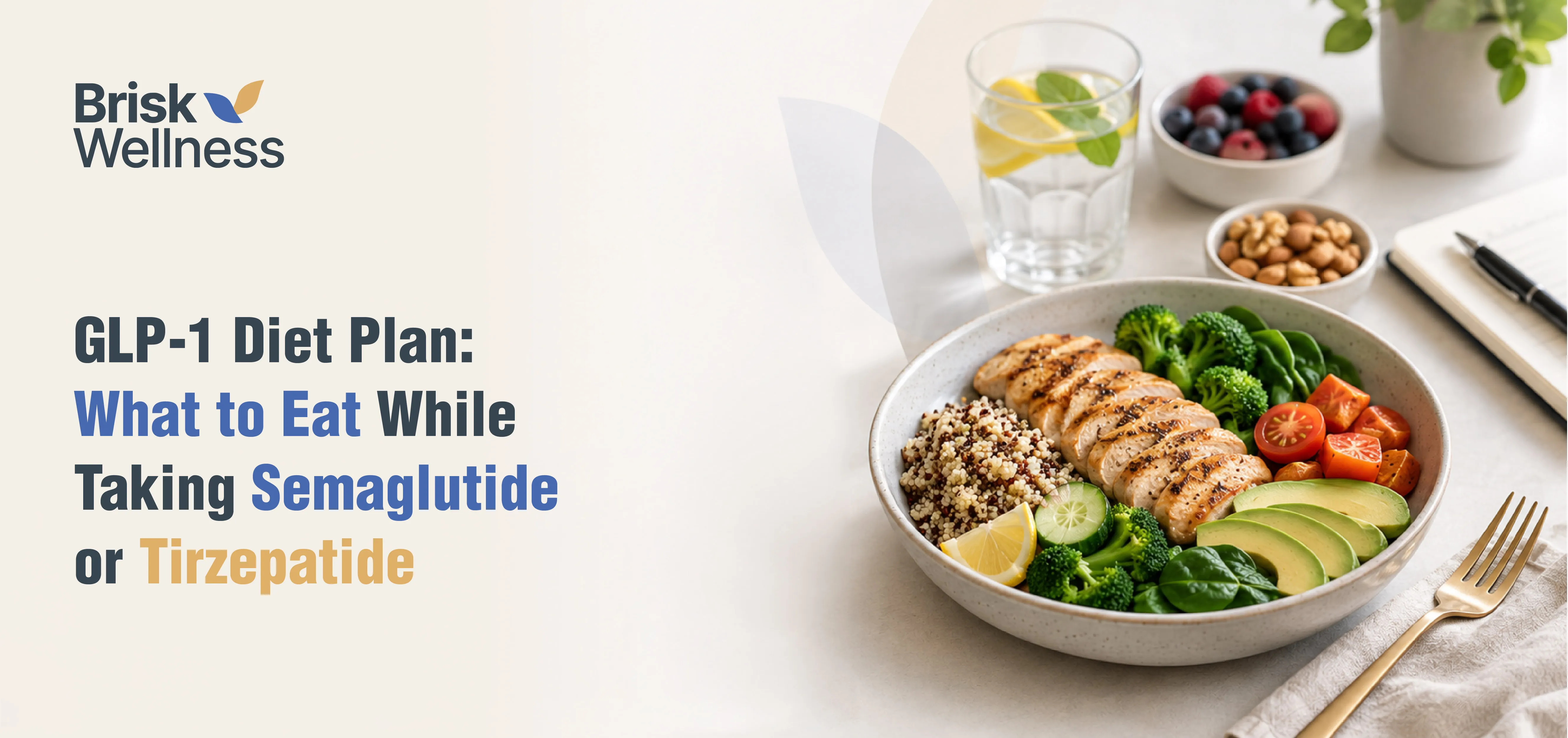
Starting semaglutide or tirzepatide can change your relationship with food pretty quickly.
You may get full after a few bites. Foods you normally enjoy may suddenly seem unappealing. Some days, eating three proper meals feels easy. Other days, you look at your plate and think, I genuinely don't want this.
That's why a GLP-1 diet plan shouldn't just be about eating less.
The medication may already help with that.
The bigger question is whether you're still getting enough protein, fibre, fluids and nutrients while your appetite is lower.
According to a joint advisory from the American College of Lifestyle Medicine, American Society for Nutrition, Obesity Medicine Association and The Obesity Society, people using GLP-1 medications should focus on nutrient-dense foods, including lean proteins, fruits, vegetables, whole grains, legumes, nuts and seeds. The advisory also recommends small, regular meals and adequate fluids, particularly when appetite is reduced. (PubMed Central (PMC))
So, here's a realistic look at what to eat on weight loss injections without turning your meals into another full-time job.
First Things First: You Don't Need a Perfect Diet
There is no universal semaglutide tirzepatide diet.
Your appetite, side effects, activity level, medical history and food preferences all matter.
What works for someone eating three meals a day may not work for someone who feels nauseous in the morning and can only manage smaller meals.
The goal is fairly simple:
Eat less food if the medication naturally reduces your appetite, but make the food you do eat count.
1. Start With Protein
Protein should probably be the first thing you think about when planning meals on a GLP-1.
Why?
Because reduced appetite can make it easy to accidentally eat very little protein.
The recent joint advisory recommends prioritising protein-rich foods, including fish, eggs, dairy, beans, lentils and lean poultry. It also suggests eating protein first during a meal when appetite is limited. (PubMed Central (PMC))
Good options include:
- Eggs
- Greek yogurt
- Cottage cheese
- Chicken
- Turkey
- Fish
- Tofu
- Lentils
- Beans
- Protein smoothies or shakes when appropriate
This is especially important if you're trying to protect muscle while losing weight
A simple rule:
Protein first. Then build the rest of your plate around it.
2. Add Fruits and Vegetables You Actually Enjoy
You don't need to force yourself to eat a giant salad every day.
The best foods on a GLP-1 are often the ones you can comfortably eat and consistently tolerate.
Try options like:
- Berries
- Apples
- Bananas
- Citrus fruits
- Tomatoes
- Carrots
- Leafy greens
- Broccoli
- Squash
- Avocado
Fruits and vegetables can help provide fibre, vitamins and minerals while adding volume without requiring huge meals. (PubMed Central (PMC))
If nausea or bloating is bothering you, though, you may need to adjust temporarily. Very high-fibre or heavy meals can worsen symptoms for some people, especially when starting treatment or increasing the dose. (PubMed Central (PMC))
3. Don't Be Afraid of Carbohydrates
A GLP-1 meal plan does not need to eliminate carbohydrates.
The focus is generally on choosing more nutrient-dense sources when tolerated.
Examples include:
- Oats
- Brown rice
- Quinoa
- Whole-grain bread
- Whole-grain pasta
- Beans
- Lentils
- Potatoes
The goal isn't to ban carbs.
It's to avoid building most of your diet around highly refined foods that don't offer much nutritional value.
The joint advisory recommends nutrient-dense foods and suggests limiting refined carbohydrates, sugar-sweetened drinks and heavily processed snack foods. (DOI)
4. Include Healthy Fats, Just Watch the Portion
Healthy fats still have a place in your diet.
Think:
- Avocado
- Nuts
- Seeds
- Olive oil
- Nut butter
But here's the thing.
GLP-1 medications already slow digestion, and very fatty meals can be difficult for some people to tolerate.
Large or high-fat meals may worsen nausea, indigestion or diarrhoea, particularly during treatment initiation or dose increases. (PubMed Central (PMC))
You don't need to remove fat completely.
Just don't make your first meal after an injection a massive greasy takeaway.
Your stomach may not thank you.
5. Keep Meals Smaller
This is one of the easiest adjustments to make.
Instead of forcing yourself to eat one huge meal, try:
Breakfast → small meal → small meal → snack if needed
The joint advisory notes that small, frequent meals can be helpful when appetite and interest in food are low. Large meals can also be more difficult to tolerate and may increase the likelihood of nausea or vomiting. (PubMed Central (PMC))
You don't need to eat every two hours.
Just avoid getting into the pattern of eating almost nothing all day because you're not hungry and then trying to eat one enormous dinner.
What a Simple GLP-1 Meal Plan Can Look Like
This isn't a prescription. Just an example of how a day could be structured.
Breakfast
- Greek yogurt
- Berries
- A few nuts or seeds
Or:
- Eggs
- Whole-grain toast
- Fruit
Lunch
- Chicken, fish, tofu or beans
- Vegetables
- Rice, quinoa or potatoes
Snack
- Cottage cheese and fruit
Or:
- A protein shake if you're struggling to eat enough
Dinner
- Fish, chicken, tofu or another protein
- Cooked vegetables
- A moderate serving of carbohydrates
That's it.
You don't need ten complicated recipes or "GLP-1-approved" food products.
Foods That Can Be Useful When Your Appetite Is Very Low
Some days, solid food might feel like too much.
The joint nutrition advisory notes that smoothies, protein drinks, yogurt, cottage cheese and soups can sometimes be easier to manage than heavier meals when appetite is reduced. (PubMed Central (PMC))
Try:
- Protein smoothies
- Greek yogurt
- Cottage cheese
- Soups with protein
- Eggs
- Fish
- Soft-cooked meals
The idea is not to live on liquids.
It's simply to have easier options available when your appetite is off.
What Should You Limit?
You don't need a list of "forbidden foods."
But some foods may make side effects worse or take up valuable space in your already smaller appetite.
Try not to rely heavily on:
- Sugar-sweetened drinks
- Large fried meals
- Highly processed snacks
- Large amounts of alcohol
- Heavy, greasy meals
- Large meals eaten very quickly
The joint advisory recommends limiting refined carbohydrates, sugar-sweetened beverages, most fast foods and ultra-processed sweets and snacks. (DOI)
Again, this doesn't mean you can never eat pizza.
It just means pizza probably shouldn't become your main source of nutrition because you only eat twice a day now.
Don't Forget Fibre
Constipation is one of the most common complaints people have on GLP-1 medications.
Fibre and fluids can help, but increasing fibre too quickly can sometimes make bloating worse.
A recent expert consensus recommends gradually increasing dietary fibre alongside adequate hydration, rather than suddenly doubling your fibre intake overnight. (PubMed Central (PMC))
Good fibre sources include:
- Fruit
- Vegetables
- Beans
- Lentils
- Oats
- Whole grains
- Seeds
If you're dealing with significant constipation, persistent vomiting or difficulty eating, speak with your healthcare provider rather than endlessly changing your diet on your own.
Drink Enough Water
This sounds obvious, but it becomes surprisingly easy to forget.
When you're eating less, you're often getting less fluid from food too.
And nausea, vomiting or diarrhoea can increase the risk of dehydration.
The American Diabetes Association's obesity standards emphasise regular monitoring of nutritional intake and note the importance of adequate fluid intake during weight-loss treatment. (PubMed Central (PMC))
Keep water nearby and sip regularly.
You don't need to force litres of water at once.
Small amounts throughout the day are usually easier.
The Best Diet on Semaglutide or Tirzepatide Is the One You Can Actually Maintain
The internet loves strict rules.
No carbs.
No sugar.
Only protein.
Intermittent fasting every day.
The reality is less dramatic.
A good semaglutide tirzepatide diet should help you:
- Get enough protein
- Eat enough nutrients
- Manage side effects
- Maintain energy
- Support muscle
- Build habits you can continue
According to recent nutrition reviews, the focus of dietary care alongside GLP-1 therapy is increasingly shifting away from simply creating a larger calorie deficit and toward food quality, adequate protein, fibre, micronutrients and sustainable eating patterns. (PubMed)
That's a much more useful way to think about it.
Quick GLP-1 Diet Checklist
If you're unsure what to eat, keep this simple:
At meals, try to include:
- A protein source
- Fruit or vegetables
- A quality carbohydrate if tolerated
- Some healthy fats
Throughout the day:
- Drink fluids regularly
- Eat smaller meals if large meals make you uncomfortable
- Adjust fibre gradually
- Avoid skipping food for long periods just because you're not hungry
- Pay attention to what foods worsen your symptoms
The Bottom Line
The best GLP-1 diet plan isn't about finding the least amount of food you can eat.
That's not the goal.
Your medication may naturally reduce your appetite. Your job is to make sure the food you do eat is giving your body what it needs.
Prioritise protein.
Eat nutrient-dense foods.
Keep meals manageable.
Stay hydrated.
And don't panic if your appetite looks different from day to day.
If you're struggling to eat enough, losing weight extremely quickly or dealing with persistent side effects, speak with your healthcare provider.
Explore Medical Weight Loss With Brisk Wellness
If you're considering what to eat on weight loss injections or exploring treatment with semaglutide or tirzepatide, Brisk Wellness connects eligible patients with licensed healthcare providers who can help determine whether medical weight-loss treatment is appropriate.
Because the medication is only one part of the journey.
Your nutrition and long-term habits matter too.
Explore medical weight-loss support with Brisk Wellness today.
FAQs
What are the best foods on GLP-1 medication?
Generally, nutrient-dense foods such as lean proteins, eggs, fish, dairy, fruits, vegetables, legumes, whole grains, nuts and seeds are good options. What you personally tolerate may vary, especially if you're experiencing nausea or other side effects.
Should I follow a strict GLP-1 meal plan?
Not necessarily. A rigid meal plan isn't required for everyone. Your eating pattern should take your appetite, medical needs, food preferences and side effects into account.
What should I eat if I feel nauseous on semaglutide or tirzepatide?
Smaller meals may be easier to tolerate. Avoiding large or very fatty meals can also help some people. If nausea is persistent or severe, speak with your prescribing provider.
Can I eat carbs while taking a GLP-1?
Yes. Carbohydrates don't need to be eliminated. Nutrient-dense options such as oats, whole grains, beans and lentils can fit into your diet when tolerated.
Do I need to take supplements on a GLP-1 medication?
Not automatically. Supplement needs depend on what you're eating, your medical history and your individual nutritional status. A provider can help identify whether you have any gaps that need attention.