
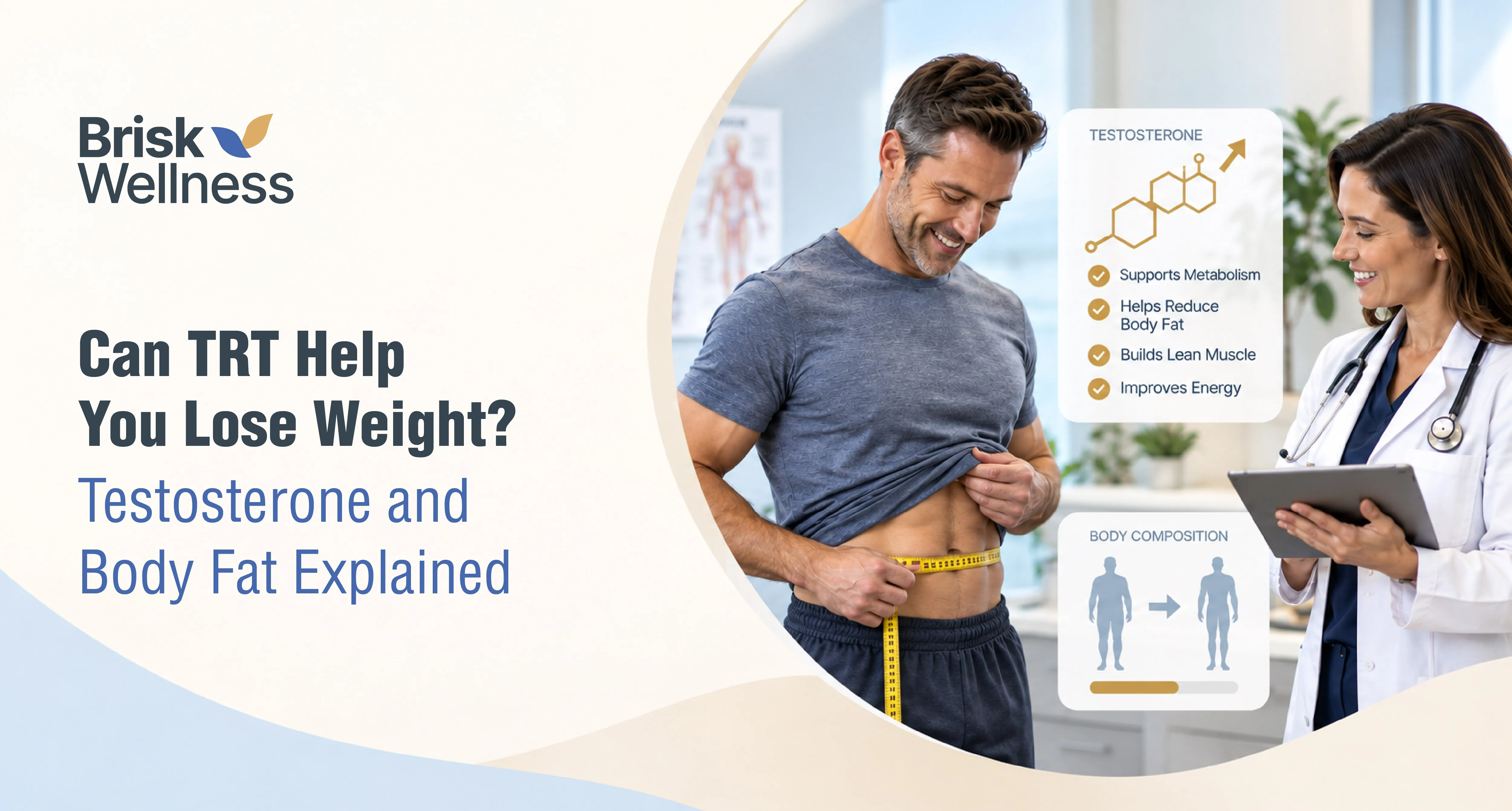
You’re eating better. You’re trying to stay active. Maybe you’ve even cut back on the late-night snacks.
But that stubborn belly fat? Still there.
If you’re a man who feels like losing weight has become harder than it used to be, you might start wondering whether testosterone has something to do with it.
It’s a reasonable question. Testosterone plays a role in muscle mass, fat distribution, and other aspects of men's health. And when testosterone levels are genuinely low, changes in body composition can become part of the picture.
But here's the important distinction: testosterone replacement therapy weight loss isn't as straightforward as it sounds.
TRT may help some men with confirmed testosterone deficiency, but it's not a shortcut to a leaner body. Let's look at what the evidence actually means for you.
Does TRT Help You Lose Weight?
The short answer: sometimes, indirectly, but TRT isn't a weight-loss drug.
Testosterone helps support muscle development and influences how your body maintains lean mass and stores fat. Men with low testosterone may experience reduced muscle mass, increased body fat, lower energy, or changes in sexual function.
When a man has clinically confirmed testosterone deficiency, appropriate treatment may improve certain symptoms and body composition.
However, results vary. TRT doesn't guarantee significant weight loss, and changes on the scale may be modest even when body composition improves.
If you're asking, does TRT help you lose weight, the better question is whether low testosterone is contributing to your symptoms in the first place.
That requires more than an online quiz or a single lab result.
The Connection Between Testosterone and Belly Fat
Here's where things get interesting.
Testosterone and body fat can influence each other in ways that make weight management more complicated.
1. Low testosterone can affect body composition
Testosterone supports muscle mass. When levels are abnormally low, some men experience reduced lean mass and increased fat mass.
You might notice that maintaining muscle feels harder, even when you're trying to stay active.
2. Excess body fat can affect testosterone levels
The relationship also works in the other direction.
Obesity is associated with lower testosterone levels in some men. Metabolic health, sleep disorders, medications, and other medical conditions can also affect hormone levels.
This can create a frustrating cycle: low testosterone may contribute to unfavorable body composition, while excess body fat may contribute to lower testosterone.
3. Fatigue can make healthy habits harder
If low testosterone is causing symptoms such as reduced energy or motivation, maintaining an exercise routine may become more challenging.
But fatigue isn't proof of low testosterone. Poor sleep, sleep apnea, thyroid problems, depression, and other conditions can cause similar symptoms.
Testosterone and belly fat are connected, but belly fat alone doesn't mean you need TRT.
Signs Your Weight Changes May Be Worth Investigating
Weight gain doesn't automatically indicate a hormone problem. Still, it's worth talking to a healthcare professional if you notice several symptoms together, such as:
- Persistent low libido
- Fewer spontaneous or morning erections
- Reduced muscle mass or strength
- Ongoing fatigue
- Changes in mood or concentration
- Unexplained changes in body composition
A diagnosis of testosterone deficiency generally requires compatible symptoms and consistently low testosterone levels confirmed through appropriate testing.
The American Urological Association provides guidance on testosterone deficiency and its evaluation: AUA Testosterone Deficiency Guideline.
The goal is to find out what's actually happening—not assume every symptom is hormonal.
What Can TRT Before and After Results Really Look Like?
Search for TRT before and after, and you'll find plenty of dramatic transformations.
But photos rarely tell the whole story.
They don't show someone's starting testosterone levels, nutrition, workout routine, sleep, other medications, or how long they've been receiving treatment.
For men with confirmed testosterone deficiency, TRT may improve lean body mass and reduce fat mass over time. But individual outcomes vary, and visible weight-loss results aren't guaranteed.
Some men may notice changes in strength or body composition without a dramatic drop on the scale.
Others may see little change in their weight.
TRT also carries risks, including increased red blood cell counts, acne, possible worsening of certain conditions, and suppression of sperm production. It can impair fertility, so men planning to have children should discuss alternatives with a qualified clinician.
The best outcome isn't the most dramatic before-and-after photo. It's appropriate treatment, measurable health improvements, and ongoing medical supervision.
TRT vs GLP-1 for Weight Loss: What's the Difference?
This is an important distinction because both treatments are frequently discussed in conversations about men's health and weight management.
TRT
GLP-1-based weight-loss treatment
Primary purpose
Treat clinically confirmed testosterone deficiency
Treat obesity or eligible overweight-related conditions
Main target
Testosterone deficiency
Appetite regulation and metabolic pathways
Effect on body composition
May improve lean mass and fat mass in appropriate patients
Can produce clinically meaningful weight loss in eligible patients
Who may benefit?
Men with symptoms and confirmed low testosterone
People who meet medication-specific eligibility criteria
Is it a general weight-loss shortcut?
No
No; it requires medical evaluation and ongoing care
GLP-1-based treatments, including certain medications that act on GLP-1 pathways, can help eligible patients lose weight. Some options also act on additional pathways, such as GIP.
TRT serves a different purpose. It treats testosterone deficiency, not obesity itself.
Can You Use TRT and GLP-1 Treatments Together?
In some cases, a clinician may consider both, depending on the patient's diagnoses, medications, health history, and treatment goals.
But combining treatments isn't automatically better. Each medication needs its own clinical justification, and the potential benefits, risks, and interactions should be reviewed.
If your main goal is weight loss, ask about evidence-based weight-management options first. If you also have symptoms suggesting low testosterone, that deserves a separate evaluation.
What If Your Testosterone Is Normal?
This is where you should be cautious.
Taking testosterone when you don't have a medical indication isn't a proven or appropriate weight-loss strategy. It can suppress your body's natural testosterone production and sperm production, among other risks.
If your testosterone levels are normal, a healthcare professional can help you explore other possible reasons for weight gain, including sleep, nutrition, medication effects, metabolic health, and other medical conditions.
You don't necessarily need another hormone. You need the right explanation.
Can an Online TRT Clinic Help?
An online TRT clinic may make it more convenient to discuss symptoms and access care, depending on where you live.
A reputable service should offer:
- Evaluation by an appropriately licensed healthcare professional
- A review of symptoms, medical history, and medications
- Appropriate testing and confirmation of low testosterone
- Clear discussion of benefits, risks, fertility, and alternatives
- Follow-up appointments and laboratory monitoring when needed
Be cautious of services that promise guaranteed fat loss, prescribe testosterone without an adequate evaluation, or treat it like a gym supplement.
Telehealth can make care more accessible. It shouldn't remove the medical safeguards.
The Bottom Line: Treat the Cause, Not Just the Belly Fat
So, can TRT help you lose weight?
For some men with confirmed testosterone deficiency, it may improve body composition as part of appropriate treatment. But TRT isn't a substitute for obesity treatment, nutrition, exercise, sleep, or a proper medical assessment.
If you're struggling with stubborn weight gain, don't jump straight to hormones—or assume that a GLP-1 medication is automatically the answer.
Start by understanding your symptoms, checking the relevant aspects of your health, and discussing your options with a qualified professional.
Brisk Wellness offers a path to explore personalized wellness care. Get in touch to learn about your options and whether a medically supervised approach may fit your needs.
Earn With Brisk: A Partnership Opportunity for Wellness Audiences
Do you run a wellness website, create men's health content, or have an audience interested in weight management and healthy living?
Brisk Wellness also offers an opportunity for eligible partners to explore wellness referrals through its affiliate program.
If you're researching a TRT affiliate program, men's health affiliate programs, or a broader telehealth affiliate program, focus on partnerships that prioritize responsible education, transparent disclosures, and appropriate clinical care.
Interested in partnering with Brisk Wellness? Visit the Brisk Wellness website to explore its affiliate partner options and learn how to get started.
Frequently Asked Questions
1. Does TRT help you lose belly fat?
TRT may reduce fat mass in some men with confirmed testosterone deficiency, but it isn't a dedicated belly-fat treatment. Results vary, and abdominal fat can have several causes.
2. How much weight can you lose on testosterone replacement therapy?
There is no reliable amount that applies to everyone. Some men experience changes in lean mass and fat mass, but TRT doesn't guarantee significant weight loss.
3. Is TRT or GLP-1 better for weight loss?
They treat different conditions. GLP-1-based medications may be appropriate for eligible patients with obesity or overweight-related health risks, while TRT is intended for clinically confirmed testosterone deficiency.
4. Can low testosterone cause weight gain?
Low testosterone can be associated with increased fat mass and reduced muscle mass. However, weight gain has many possible causes, and symptoms alone cannot establish testosterone deficiency.
5. Can I get TRT through an online clinic?
In many cases, telehealth can support evaluation and ongoing testosterone treatment. A qualified clinician must determine whether treatment is appropriate and arrange necessary testing and monitoring.