
Ever had one of those weeks where you're technically fine, but you just don't feel fine?
You slept. You ate. You had your coffee. Still tired.
Or maybe you've just come back from travelling, had a stressful few days, or pushed yourself pretty hard at the gym. That's usually when IV therapy starts sounding interesting.
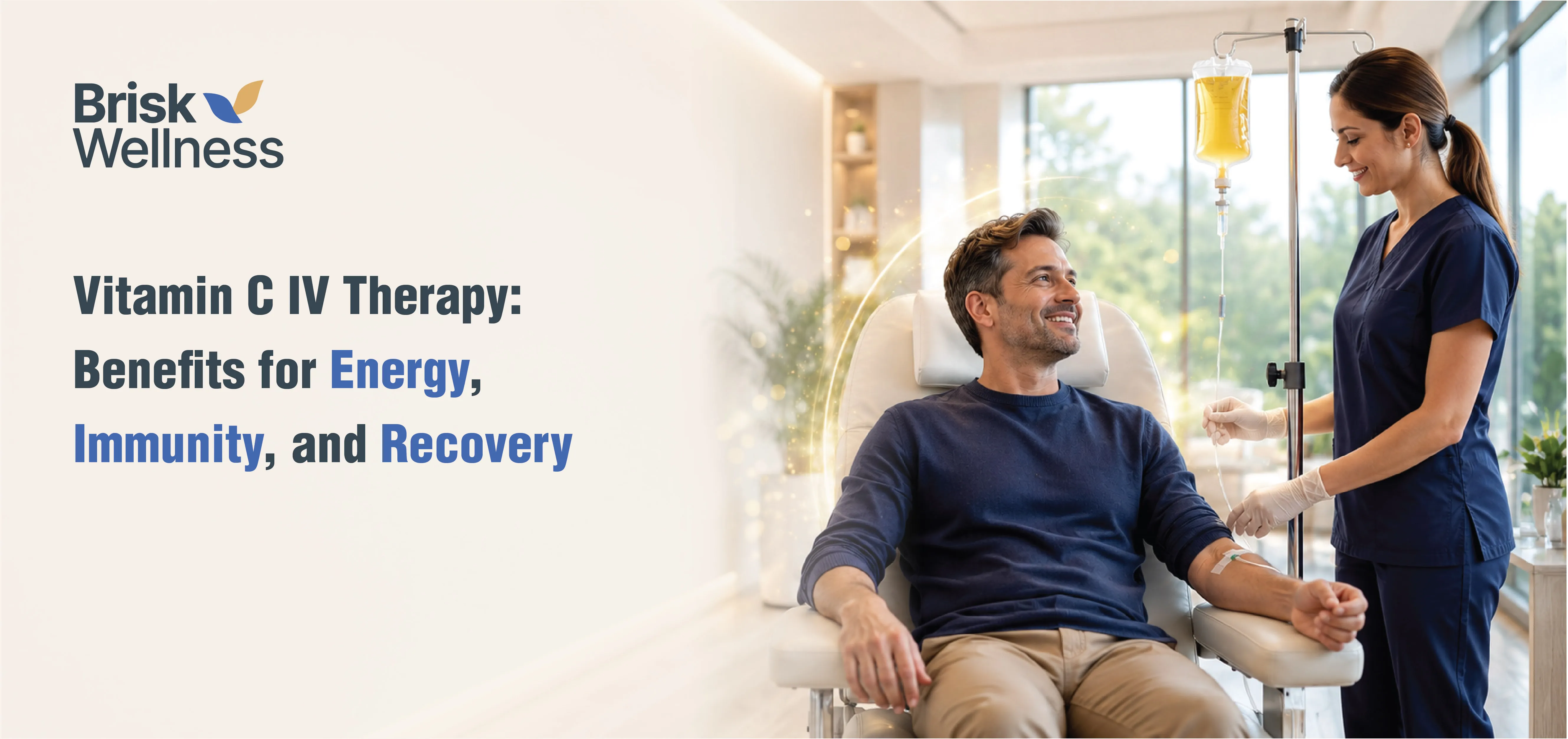
Vitamin C IV therapy has become pretty common in wellness clinics. The idea is simple. Instead of taking vitamin C as a food or tablet, it's given through an IV and goes straight into your bloodstream.
But there's a lot of information online about what a vitamin C drip can supposedly do. Some of it is reasonable. Some of it... gets a little carried away.
So let's separate the two.
What Is Vitamin C IV?
Vitamin C is not some trendy new wellness ingredient. Your body has needed it forever.
It's involved in things like collagen production, wound healing, antioxidant protection and normal immune function. You get it from everyday foods such as oranges, strawberries, peppers and broccoli.
An IV is just a different way of delivering it.
With IV vitamin C for immunity, a healthcare professional administers vitamin C directly into a vein. Because it doesn't have to pass through the digestive system first, IV administration can result in much higher levels of vitamin C in the blood than taking the same amount orally.
That sounds impressive, but it doesn't mean everyone needs high-dose vitamin C.
More isn't always better.
According to the NIH Office of Dietary Supplements, vitamin C is important for normal immune function and acts as an antioxidant in the body. The amount of vitamin C someone actually needs, and the potential benefit of supplementation, can depend on their existing levels.
So yes, vitamin C matters.
No, that doesn't mean an IV is a magic fix.
Why Are People Getting Vitamin C Drips?
Usually, the answer is pretty ordinary.
They want to feel better.
Someone might be run down after a busy month. Someone else might be travelling constantly. Another person may simply be interested in adding IV therapy to their existing wellness routine.
The most common reasons you'll hear are energy, immunity and recovery.
Let's look at each one.
1. Immunity
Vitamin C has a genuine connection to the immune system.
It supports normal immune-cell function and has antioxidant properties. That's one reason IV vitamin C for immunity gets so much attention.
But there's a line between supporting immunity and claiming that an IV will prevent illness.
An IV won't make you immune to the flu that's going around your office.
It won't replace a vaccine.
And it certainly shouldn't replace medical treatment when you're actually sick.
It's better to think of vitamin C as one part of normal immune health rather than some kind of emergency shield.
2. Energy
This one needs a little more context.
When people search for IV therapy for energy, they're usually hoping for that "I feel like myself again" feeling.
And some people do report feeling refreshed after an IV.
But vitamin C itself shouldn't be marketed like a shot of caffeine.
Your body uses vitamin C in normal energy metabolism, but if you're exhausted every single day, there may be something else going on.
Maybe you're barely sleeping.
Maybe you're dehydrated.
Maybe your diet isn't giving you what you need.
Or maybe there's an underlying health issue that needs attention.
An IV shouldn't become a way of covering that up.
3. Recovery
This is where you'll often see vitamin C drip benefits discussed in wellness circles.
Vitamin C has antioxidant functions and plays a role in normal tissue health. For people who exercise regularly, that's certainly relevant.
But recovery isn't just about vitamin C.
If you're training hard and sleeping five hours a night, an IV isn't going to magically fix that.
Eat properly.
Get enough protein.
Drink water.
Rest.
Then look at the extras.
Honestly, those basics are still doing most of the heavy lifting.
IV Vitamin C vs Taking a Supplement
This is probably one of the most sensible questions to ask.
If you're healthy and simply trying to get enough vitamin C, food and oral supplements can usually do the job.
An IV is different because the nutrient goes directly into your bloodstream.
That can be useful in certain situations, but it doesn't automatically make IV therapy "better."
Whether it's worthwhile depends on the individual and why they're considering it in the first place.
What Actually Happens During a Vitamin C Drip?
Nothing particularly dramatic.
A healthcare professional places an IV into a vein, usually in your arm, and the infusion runs for a period of time.
You'll probably feel a quick pinch when the IV goes in.
Then you sit there.
Read something. Watch your phone. Catch up on work if you're that person.
The actual formulation and dose can vary between providers, so it's worth asking what you're being given rather than assuming every vitamin C drip is identical.
Is It Safe?
For many people, IV therapy can be well tolerated when it's provided appropriately.
But an IV is still an IV.
You can have bruising, soreness or irritation around the insertion site. There is also a risk of infection or a reaction to the infusion.
High-dose IV vitamin C isn't suitable for everyone either. Certain kidney problems and other medical conditions can make it inappropriate.
That's why a provider should look at your health history first.
If a clinic wants to hook you up without asking a single question about your health, that's probably not the kind of shortcut you want.
Looking for "IV Vitamin Therapy Near Me"?
This is where I'd do a little homework.
Don't choose a clinic just because the website looks expensive.
Ask:
Who is actually administering the IV?
Will someone review your medical history?
What's in the infusion?
What dose are you receiving?
What are the possible risks?
Can you speak with a qualified healthcare professional before treatment?
Those questions aren't being difficult. They're basic.
IV vitamin therapy near me might give you 20 options in your area. That doesn't mean all 20 deserve your trust.
So, Is Vitamin C IV Therapy Worth It?
It can be a reasonable option for some people.
But it depends on what you're expecting from it.
If you're looking for a cure-all for exhaustion, immunity problems and poor recovery, you're going to be disappointed.
If you're interested in provider-guided IV wellness and understand what the treatment can and can't do, that's a different conversation.
And if you're constantly tired or feeling unwell, start there. Find out why.
Your body is usually trying to tell you something.
Explore IV Wellness With Brisk Wellness
Curious about vitamin C IV therapy, other IV vitamin options, or wellness treatments that fit your goals?
Brisk Wellness connects you with provider-guided wellness services so you can understand your options before deciding what makes sense for you.
Explore your wellness options with Brisk Wellness today.
FAQs
Will a vitamin C IV instantly give me energy?
Probably not in the way a coffee does. If you're always tired, it's worth figuring out what's behind it rather than expecting an IV to fix everything.
Can I get vitamin C through food instead?
Of course. Foods like citrus fruits, peppers and broccoli are all good sources. IV therapy is an additional option, not a requirement for getting vitamin C.
Can a vitamin C drip prevent a cold?
No. Vitamin C supports normal immune function, but it isn't a guarantee that you won't get sick.
How often should I get a vitamin C IV?
There isn't one schedule that works for everybody. A qualified provider should look at your health and reason for treatment before recommending anything.
What should I check before booking an IV?
Ask who's administering it, what's actually in the IV, whether your health history will be reviewed, and what the possible risks are. If nobody can answer those questions clearly, I'd keep looking.